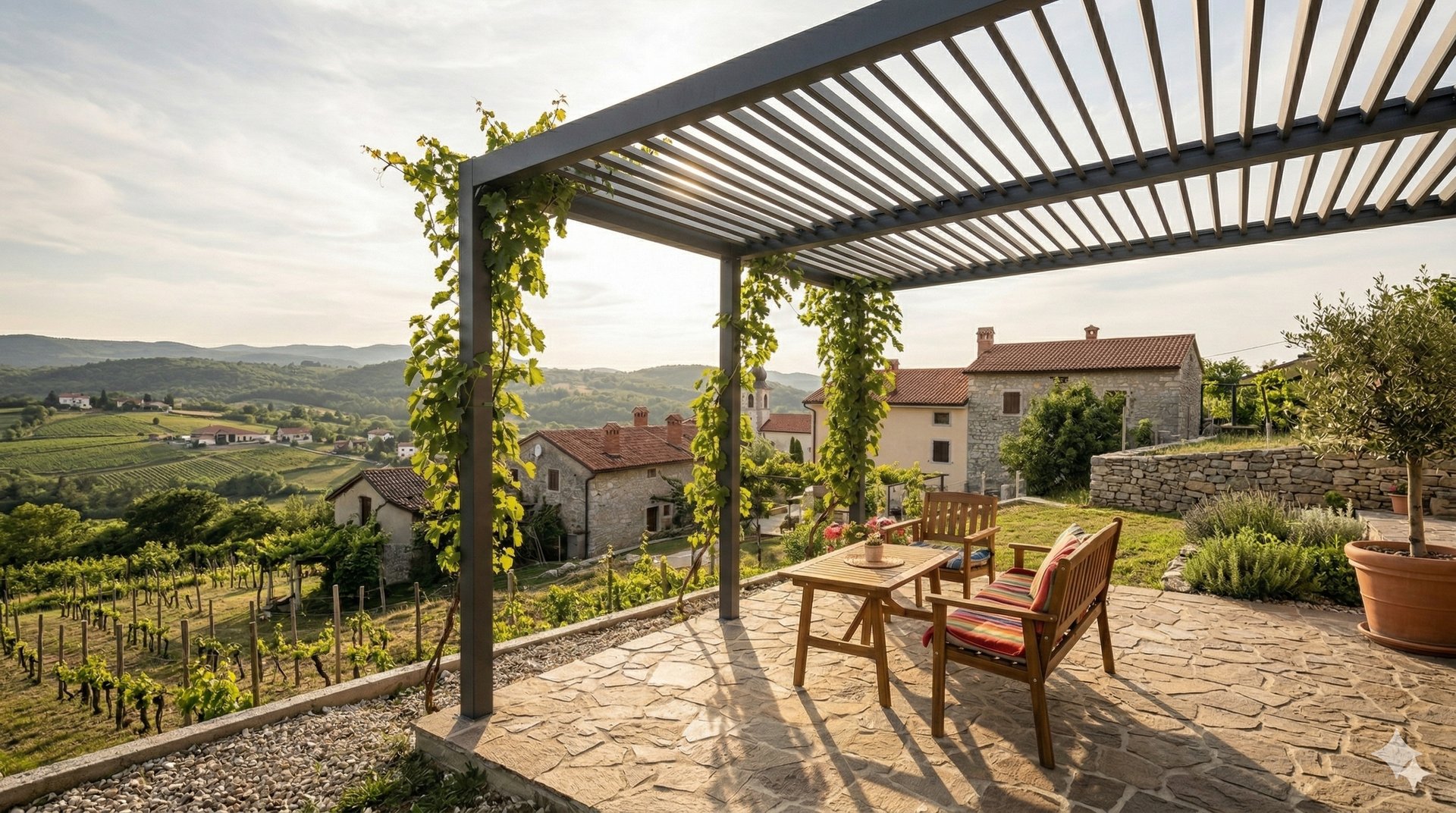
A pergola is one of those investments that change how you use your home. Suddenly you have an outdoor living room that works from spring to late autumn. But choosing the right pergola is not as simple as it looks. Here is a guide to help you choose.
First: why a pergola at all?
A pergola is not just a roof over a terrace. It defines a space. It creates the feeling of an outdoor room — with clear boundaries, shade and shelter. Under a pergola you naturally gather for lunch, coffee or an evening conversation. Without it, a terrace is just paving. With it, it becomes the place where life happens.
In practical terms, a pergola protects from sun and rain (depending on the roof type), extends the season you can use your outdoor space, and increases the value of your property.
Pergola types — which one is for you?
A classic open pergola has longitudinal or cross beams without infill. It offers partial shade and an aesthetic frame but no protection from rain. Ideal for mild climates or as a decorative element.
A louvred-roof pergola has movable louvres that open and close. In sunshine, the louvres open for airflow; when it rains, they close for full protection. Currently the most popular choice for contemporary homes — it combines flexibility and function.
A fixed-roof pergola offers complete weather protection. The roof can be polycarbonate, glass or sandwich panels. Suited to those who want reliable protection all year round.
Structural material
Aluminium is by far the most common material for contemporary pergolas. It is light, durable, rust-free and allows elegant, slender profiles. Powder coating in any RAL colour means the pergola can match your house.
Steel suits larger spans or specific aesthetic requirements. It is heavier and needs anti-corrosion protection, but allows a more industrial or robust look.
Wood is the classic choice, offering natural warmth, but it needs regular maintenance — much like a timber façade.
Innovations that change the game
Modern pergolas have become smart systems for outdoor living. Integrated LED lighting enables ambient scenes — from warm white for dinners to colour for parties. Built-in speakers turn the pergola into an outdoor audio system. Side screens — glass, fabric or water curtain — add privacy and wind protection.
The most innovative solution is the water curtain, which acts as a screen, a cooling element and a projection surface at the same time. This technology is especially interesting for hospitality venues that want to create an unforgettable impression.
Size and placement
A pergola must be in proportion to the space. Too small on a large terrace and it looks lost; too large and it feels cramped. As a rule of thumb, it should cover at least a dining table with chairs plus some room to move — typically 3 x 4 metres or more.
The ideal position is against the house, attached to the façade — the structure is more stable and the transition between inside and outside feels natural. Free-standing pergolas are possible but require stronger foundations and structure.
How much to invest?
The price of a pergola depends on size, material, roof type and features. A basic aluminium louvred pergola starts at a level comparable to a good outdoor kitchen. With extras — lighting, speakers, a water curtain — the investment grows, but so does the experience.
The key is to see a pergola as a long-term investment in your home and quality of life — not as an expense. A good pergola lasts 20+ years without major work.