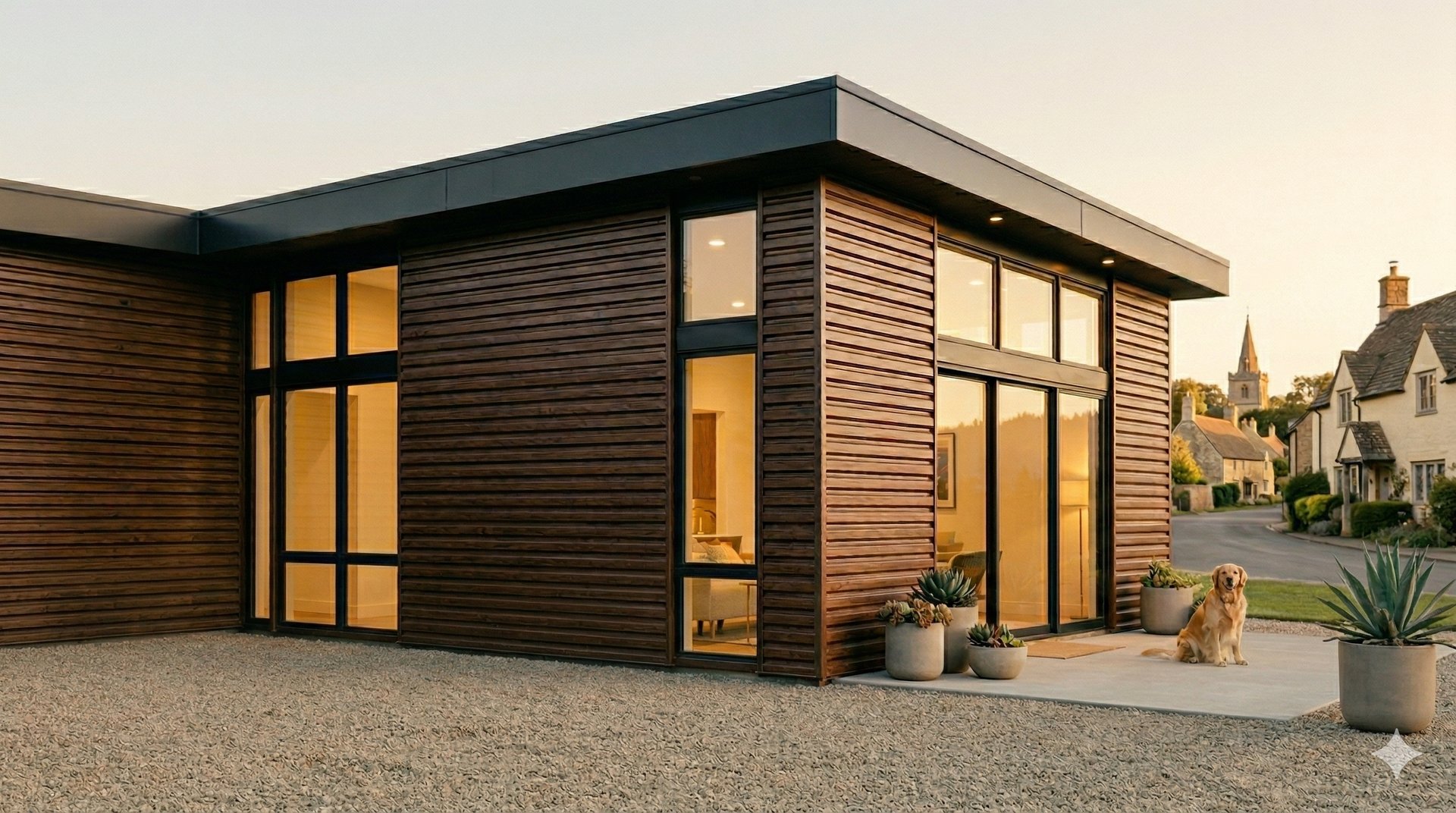
A timber façade is beautiful. Until it starts to decay. If you are considering a wood-look façade, today there is an alternative that keeps all the warmth and beauty of wood without its biggest drawback — constant maintenance. Let's take a close look at both options.
Real wood — a classic that demands your attention
A façade in larch, pine or cedar is undeniably beautiful. But wood is an organic material that reacts to moisture, sun, frost and insects. A real-wood façade needs recoating every 2–4 years, depending on exposure. That means time, money and logistics — scaffolding, labour, paint.
Wood also warps, cracks and changes colour unevenly over time. What looks rustic and warm at first can look neglected after a few years without care. Wood demands a relationship — it is a living material.
Wood-effect cladding — the look without compromise
Modern steel or aluminium cladding with a wood-effect print is visually almost indistinguishable from real wood. Printing technology on metal has made a huge leap in recent years — the texture, colour and feel are remarkably realistic.
The difference lies beneath the surface. Metal cladding doesn't absorb moisture, decay, crack or need painting. Once installed, it performs for decades without intervention. Occasional cleaning is enough.
A practical comparison
Let's compare realistically over 15 years. A timber façade will need at least 3–4 recoats in that time, each one costing materials and labour. A wood-effect metal façade needs nothing over the same period.
Add up the initial investment and maintenance, and a metal façade typically becomes cheaper after just 6–8 years. After 15 years the difference is significant — and the metal façade still looks as it did on installation day.
What finishes are available?
Façade cladding comes in many colours and textures — from light oak and dark walnut to grey larch and even corten effect. It can be installed horizontally or vertically. Different widths create different effects — narrower profiles feel more modern and dynamic, wider ones calmer and more classic.
The cladding is mounted on a substructure that creates a ventilated façade — air circulates behind the cladding and the building breathes. It is the technically correct solution and extends the life of the entire façade.
Who is façade cladding ideal for?
Façade cladding is an excellent choice for anyone who wants the look of wood without the maintenance. It makes particular sense for new builds seeking a contemporary, warm look, for renovations where you want a dramatic transformation, and for commercial or hospitality properties where visual impact is key and time for maintenance is limited.