When choosing a fence, you often face a dilemma: aluminium or classic steel? Both materials have their strengths and limits. Here is an honest comparison to help you choose the right one.
Aluminium — light, resistant, maintenance-free
Aluminium is an exceptionally light material — about a third of the weight of steel. That means easier installation, less load on foundations and simpler handling. But light does not mean weak. Modern aluminium profiles are designed to withstand wind, impact and loads with ease.
Aluminium's greatest advantage is its resistance to corrosion. It naturally forms an oxide layer on its surface that protects it from rusting. Combined with powder coating — the standard finish for aluminium fences — you get a surface that resists UV rays, scratches and the weather.
Aluminium needs no maintenance. No painting, no varnishing, no sanding. An occasional wash with water and a soft cloth keeps the fence looking new.
Classic metal (steel/iron) — strength and tradition
A steel or iron fence is the traditional choice, offering exceptional strength and robustness. Where a fence is exposed to physical loads — along roads or on industrial sites, for example — steel is often the better option.
The weakness of classic metal is corrosion. If the fence is damaged, rust can appear where the protective coating is broken, unless the damage is repaired in time.
Our fences are protected against the elements; with correct installation and care, there is no need to worry about rust.
Aesthetically, steel offers options that are harder to achieve in aluminium — such as forging, bending and shaping organic forms that require a stronger material.
When to choose aluminium?
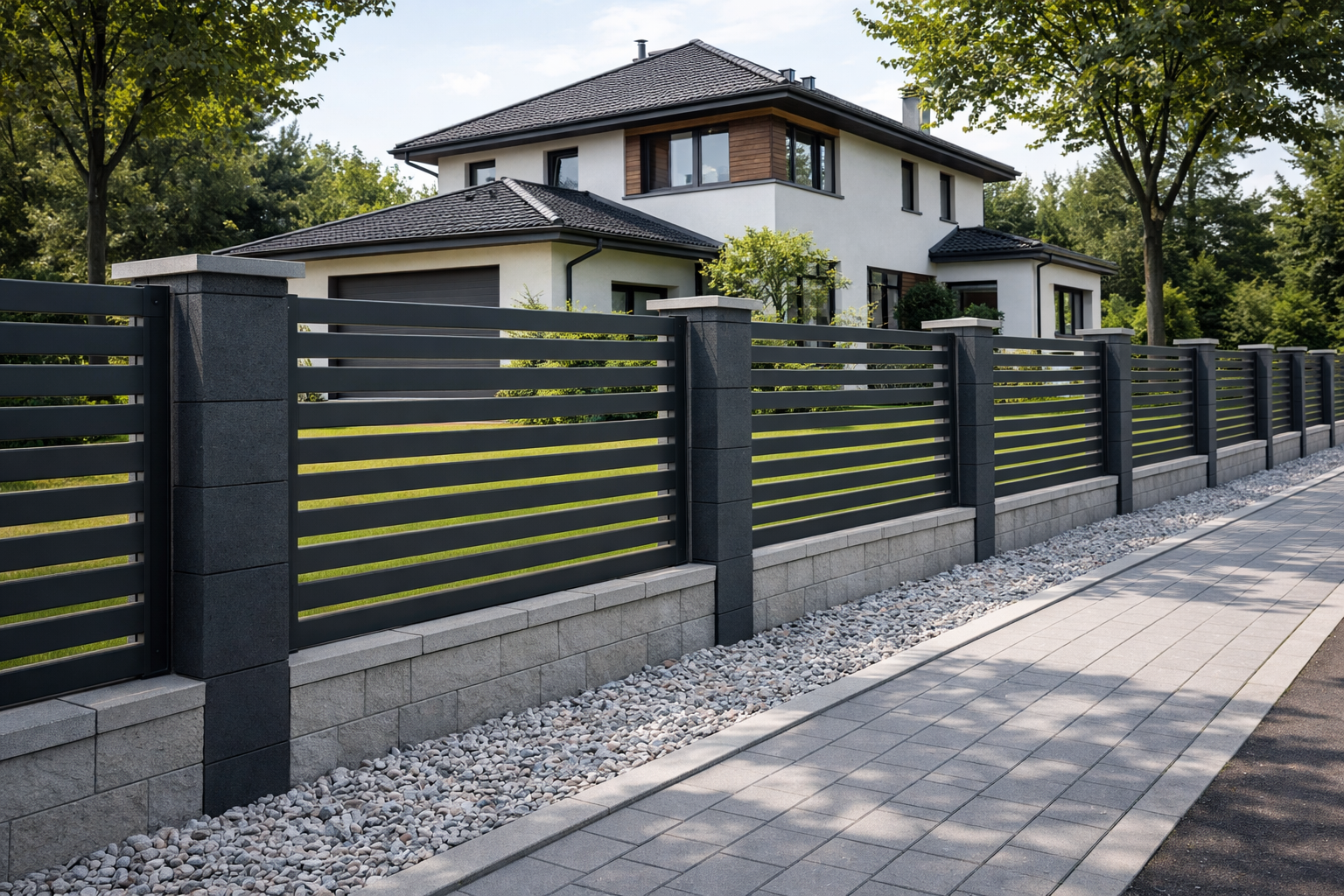
Aluminium is the right choice when you want a contemporary, clean look with straight lines and slats; when zero maintenance is a priority; when the fence is near the sea or in a humid environment (salt and moisture are steel's enemies); and when you want a lighter structure that doesn't burden the foundations.
When to choose steel or corten?
Steel or corten is the better choice when you want a specific aesthetic — such as corten's patina or forged details; when the fence is exposed to physical loads; when you want a massive, robust feel that light aluminium struggles to achieve; and when the fence must be both decorative and secure.
Cost comparison
As an initial investment, an aluminium fence is often comparable to or slightly more expensive than steel. But once you add maintenance over the years — occasional repainting, rust repairs — aluminium becomes the more economical choice in the long run. A corten fence usually sits in a higher price bracket, but it also requires no maintenance.
The most important advice
Don't choose a material — choose a solution. Tell the maker what result you want — the look, the feel, the level of privacy, the style — and let them propose the material that achieves it best. Sometimes the answer is aluminium, sometimes corten, sometimes a combination.