



Facade Panels: wood imitation vs. real wood — which is the better choice for your facade
A wooden facade is beautiful. Until it starts falling apart. If you're considering a facade with the look of wood, today you have an alternative that preserves all the warmth and aesthetics of wood, without its biggest weakness — constant maintenance. Let's look at both options up close.
4/8/20262 min read
| Real wood — a classic that demands your attention
A wooden facade made of larch, pine or cedar is undeniably a beautiful material. But wood is an organic material that reacts to moisture, sun, frost and insects. A real wood facade requires coating renewal every 2–4 years, depending on exposure. This means time, money and logistics — scaffolding, workers, paint.
On top of that, wood warps, cracks and changes colour unevenly over time. What initially looks rustic and warm, after a few years without maintenance looks neglected. Wood demands a relationship — as the living material it is.
| Facade panels in wood imitation — the look without compromise
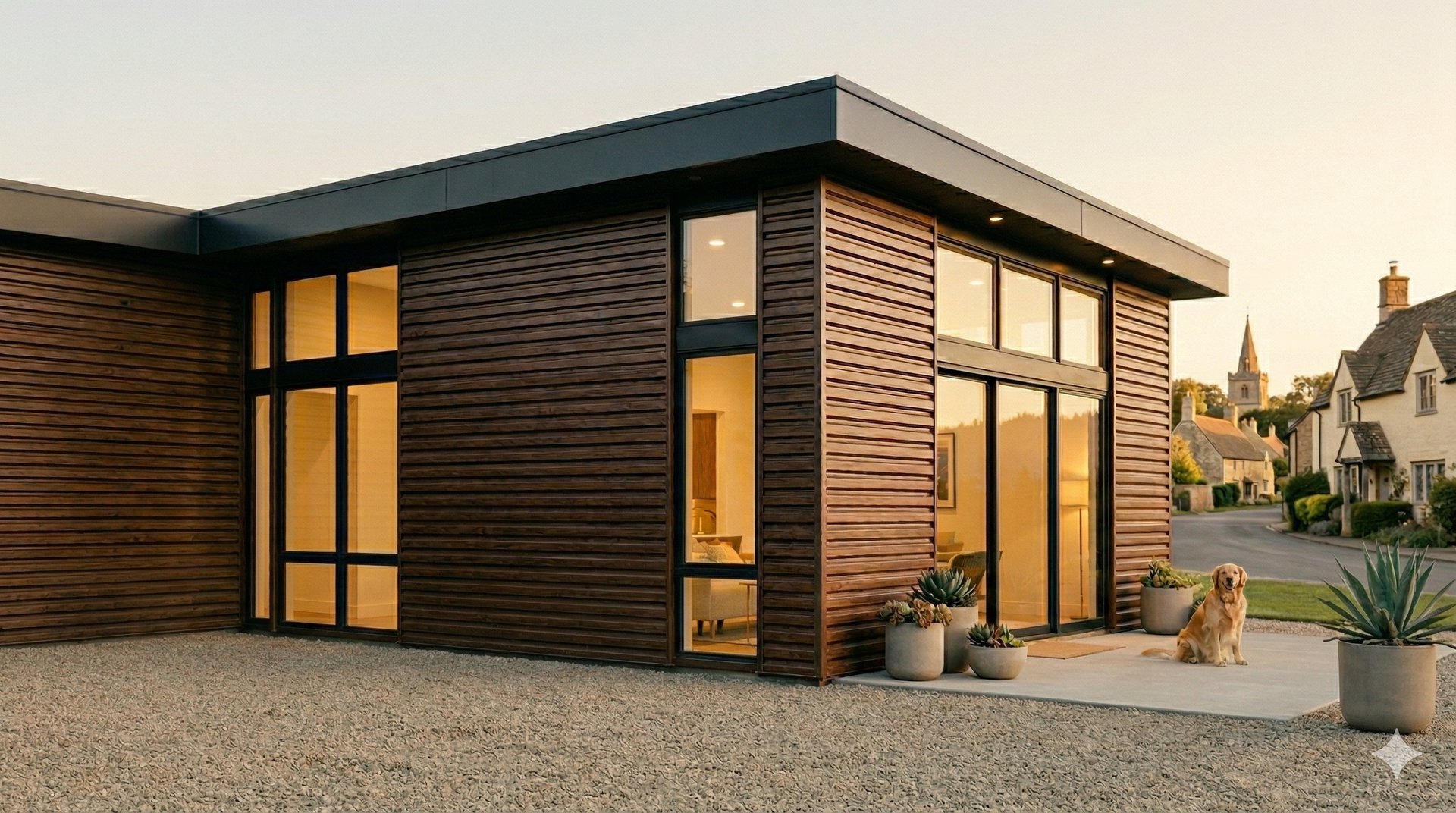
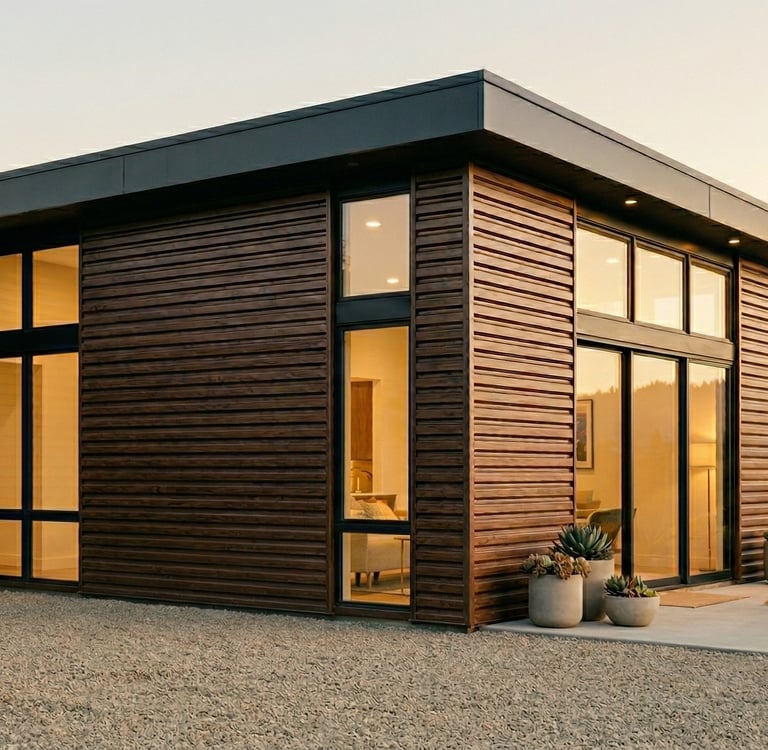
Modern facade panels made of sheet metal or aluminium with wood-imitation printing are visually virtually indistinguishable from real wood. The printing technology on metal has made an enormous leap forward in recent years — texture, colour and feel are extremely realistic.
But the difference lies in what happens beneath the surface. A metal panel doesn't absorb moisture, doesn't deteriorate, doesn't crack and doesn't need painting. Once installed, it works for decades without intervention. Occasional washing with water is enough.
| Real-world comparison
Let's look at a realistic comparison over a 15-year period. The wooden facade will need at least 3–4 coating renewals during this time. Each renewal means material and labour costs. The sheet metal facade in wood imitation needs nothing in the same period.
When you add up the initial investment and maintenance costs, the metal facade is typically cheaper after just 6–8 years. After 15 years, the difference is substantial — and the metal facade still looks like the day it was installed.
| What designs are possible?
Facade panels are available in numerous colours and textures — from light oak and dark walnut to grey larch and even corten imitation. They can be mounted horizontally, vertically or at an angle. Different panel widths create different visual effects — narrower panels look more modern and dynamic, wider ones calmer and more classic.
The panels are mounted on a substructure that enables a ventilated facade — meaning air circulates behind the cladding and the building breathes. This is the technically correct solution that extends the lifespan of the entire facade.
| Who are facade panels ideal for?
Facade panels are an excellent choice for anyone who wants the look of wood without maintenance. They're particularly suitable for new builds where you want a modern, warm appearance, for renovating older facades where you want a dramatic change, and for commercial or tourism properties where visual impact is key and time for maintenance is limited.
Terms and conditions
info@kovinart.com
+38640863350
© 2026. All rights reserved by KovinART, Klemen Vidmar s.p.